
Votre recherche
Si vous recherchez une œuvre ou un artiste, consultez le site des collections
72 résultats
Archetype Group
Archetype Group establishes itself as a key player in project management and project owner assistance in building construction on an international scale.The company aims to design sustainable and high-performance buildings, offering a complete range of services: architecture and urban planning, building engineering, industrial and process engineering, as well as project management and construction economics.Founded in Vietnam in 2002 by a French architect and engineer, Archetype Group has been involved in the design of over 1,500 projects in 50 countries. With a team of over 1,000 employees spread across four continents in 27 offices, the group supports major players in the hospitality, real estate, and industrial sectors. Archetype Group stands out for its commitment to ecological construction.In collaboration with environmental organizations, the group has set ambitious goals: to achieve zero carbon footprint and 100% virtuous buildings by 2032. This initiative has been praised by the World Bank (IFC) and EDGE experts, confirming its leadership in the field.In 2026, Archetype Group chose to support the museum by becoming a patron of the institution's twentieth anniversary.
Cultural democratization and territorial action
The musée du quai Branly - Jacques Chirac has been pursuing a dynamic policy since its opening to reach out to all audiences, wherever they may be and regardless of their situation.A policy of mediation towards all audiencesDemocratizing access to culture means making the richness of the collections under the museum's care accessible to all. To achieve this, the museum is committed to facilitating daily access for all audiences and implementing dedicated actions towards specific target audiences. This is a requirement aimed at removing, one by one, the barriers to visiting, whether they are geographical, related to ticket prices, or socio-cultural.Actions in the regionsReaching new audiences across the entire territory is one of the establishment's main priorities. Since 2013, the Ateliers nomades, a unique outreach program, have allowed the development of a new type of relationship with local communities by operating in familiar places for residents (schools, associations, community centers, cultural venues, medical facilities, etc.). Following Cergy-Pontoise, Clichy-sous-Bois, Montfermeil, and the Grand Paris Sud-Seine-Essonne-Sénart agglomeration (Bondoufle, Courcouronnes, Évry, Lisses, Ris-Orangis, and Villabé), the fourth edition with Argenteuil was completed in 2021, having reached nearly 20,000 people on-site and welcoming 11,500 residents from Argenteuil to the museum. New partnerships with the cities of Villiers-le-Bel and Longjumeau were initiated in 2021 to expand the territories benefiting from the museum's off-site offers.Furthermore, significant work has been carried out since 2020 on developing actions within the framework of the Micro-folies. Around fifteen Micro-folies in Île-de-France, in the regions, and even abroad have been identified to receive the Boîte à voyages. The Boîte à voyages is an off-site mediation tool aimed at school audiences, extracurricular groups, and classes for school inclusion, offering educators a set of educational resources focused on 24 iconic museum works, each of which is the subject of two activities. Mediators, after receiving training, can rely on the rich content to conduct sessions with the audiences.Actions for individuals in the criminal justice systemSince 2010, the museum has implemented an off-site action policy targeting individuals in the criminal justice system. The cultural offer made to them includes two aspects: activities in closed environments, within prisons themselves, and activities in open environments, including visits to the museum for detainees undergoing reintegration programs ahead of an upcoming release.Lasting partnerships have been established with the Santé prison, the Paris Probation and Insertion Service (SPIP Paris), the Fresnes penitentiary center, the Youth Judicial Protection of Île-de-France, and the Versailles women's prison.Actions for hospitalized individuals and residents in nursing homesBecause some individuals cannot travel, the musée du quai Branly - Jacques Chirac chooses to reach out to them. Since 2017, the museum has collaborated with the AP-HP to offer hospital sessions led by the museum's lecturers and storytellers and music reading sessions. A partnership has also been initiated with the La Joliette retirement home in Marseille to set up video conference sessions with residents, particularly to maintain the connection with these audiences during the health crisis.
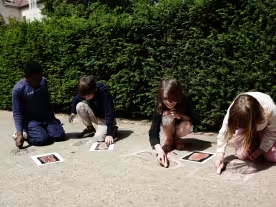
Montreuil. Hors les murs. Café Maquis.
© musée du quai Branly - Jacques Chirac, photo Cyril Zannettacci
Territories
Quai Branly nomadic Territories is aimed at local authorities wishing to strengthen the lasting ties between their residents and the musée du quai Branly - Jacques Chirac, through a long-term partnership. Implemented over two years, this initiative is based on cooperation involving the sharing of knowledge between the museum and local actors, focusing on audiences and their practices.During this period, the musée du quai Branly - Jacques Chirac collaborates with all local partners to design projects that complement their existing actions. This initiative is built on a continuous back-and-forth logic: intervening off-site, meeting residents, while also encouraging them to visit the museum, with the aim of making it a recognized and accessible space.The partners, from various sectors such as associations, schools, extracurricular activities, early childhood, culture, sports, and social services, play a central role in this approach. The goal is to promote their use of the museum's resources (mediation tools, workshop formats, and visits), integrating them into their programming.A wide range of activities is thus carried out within local infrastructures, in collaboration with all partners and meeting their specific needs.
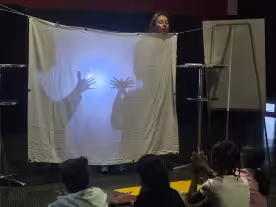
Solidarity
By partnering with volunteers and professionals from organizations working in the social field, the musée du quai Branly - Jacques Chirac is involved in the "Living Together" mission of the Ministry of National Education. The museum thus opens its doors and offers the opportunity for groups in situations of social or economic vulnerability, as well as for detainees, French learners, and homeless individuals, to discover its collections. Aware of the constraints faced by partner organizations, Quai Branly Nomade Solidarity proposes a multi-stage approach, starting with visits to the organizations and the implementation of tailored activities. The museum ensures that these activities meet the needs and specificities of the participants. A special mention was also awarded to the musée du quai Branly - Jacques Chirac by the Ministry of Culture, as part of the "Dare the Museum" award in 2018.
Terms and Conditions of Sale
The present general terms and conditions of sale (hereinafter the "General Terms and Conditions of Sale") apply to any purchase made for visiting the musée du quai Branly - Jacques Chirac, via the website www.quaibranly.frThe website, the source code, the texts, the images, and other elements of the site are the exclusive property of the musée du quai Branly - Jacques Chirac. The entire content of the site is protected by copyright legislation. As such, and in accordance with the provisions of the intellectual property code, only the use of the site for private purposes is authorized. Otherwise, the infringer is exposed to prosecution before the competent jurisdiction.
La Galerie des cinq continents
Within the Louvre Museum, this presentation relates one hundred and thirty major works of world heritage from the collections of the Louvre, the musée du quai Branly - Jacques Chirac, and other institutions, articulating them around major universal themes - the representation of power, forms of the sacred, the conception of the world, and the relationship with natural elements.In 2000, under the impetus of President Jacques Chirac, the creation of the Pavillon des Sessions brought the arts of civilizations from Africa, Asia, Oceania, and the Americas into the largest French museum institution, thus including them in the narrative of art history. Twenty-five years later, as the plurality of heritages is recognized and shared, the creation of the Galerie des cinq continents aims to resonate the cultures with each other.The Galerie des cinq continents, the result of a joint curatorial effort between the musée du quai Branly - Jacques Chirac and the Louvre, creates the conditions for the encounter between works, cultures, and eras. By intersecting knowledge, this new presentation, along with a dedicated route to the history of collections, is part of a broader movement: that of breaking down artistic narratives, emphasizing the equality, diversity, and universality of heritages, allowing visitors to weave sensitive and meaningful correspondences between works, and collectively tell the story of humanity in its diversity and richness.
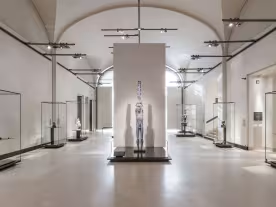
La Galerie des Cinq Continents, musée du Louvre
© musée du quai Branly - Jacques Chirac, photo Nicolas Du Pasquier